On Copenhagen: Hygge
Living in the U.S. these days, I often wonder what utopia would be. There would certainly be less division, less pointing of fingers, more focus on a future where we all belong. But what would it feel like?
What would it feel like to step inside this world, to hear its trees rustle in the breeze as if to reaffirm that they’re alive, to feel the light that illuminates its most intimate corners? While my many of my grievances with society today are political, I can’t help but envision a physical reality to this utopia.
For me, summer in Copenhagen will always be the first stop when I let my mind escapes to this more perfect world.
Copenhagen is quite sly. It doesn’t flaunt its royal roots or wear the grandeur of its history like a badge; in fact, those bits of the city all blur together in my memory. What remains crystal, though, is how it all breathed with life.
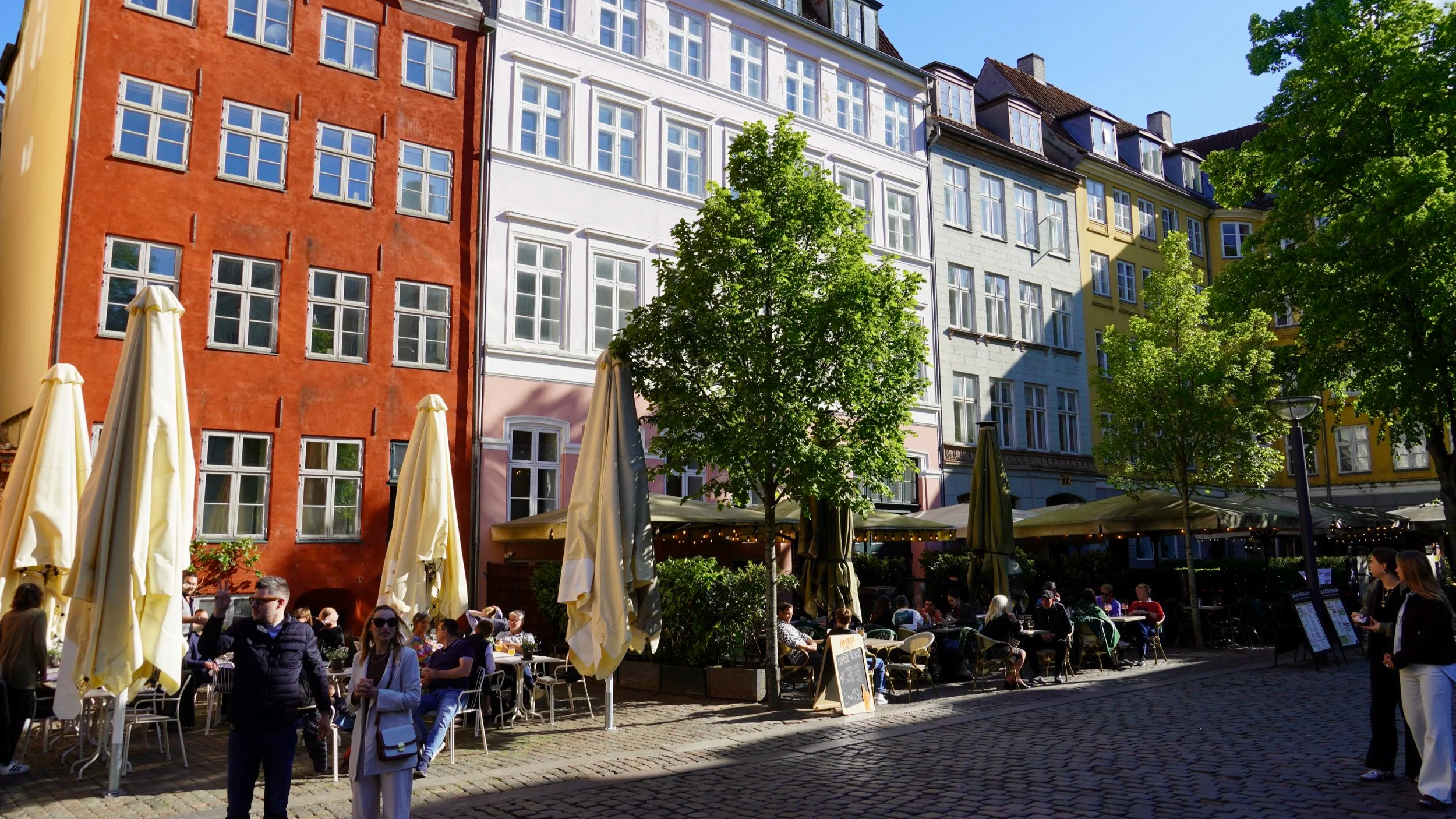
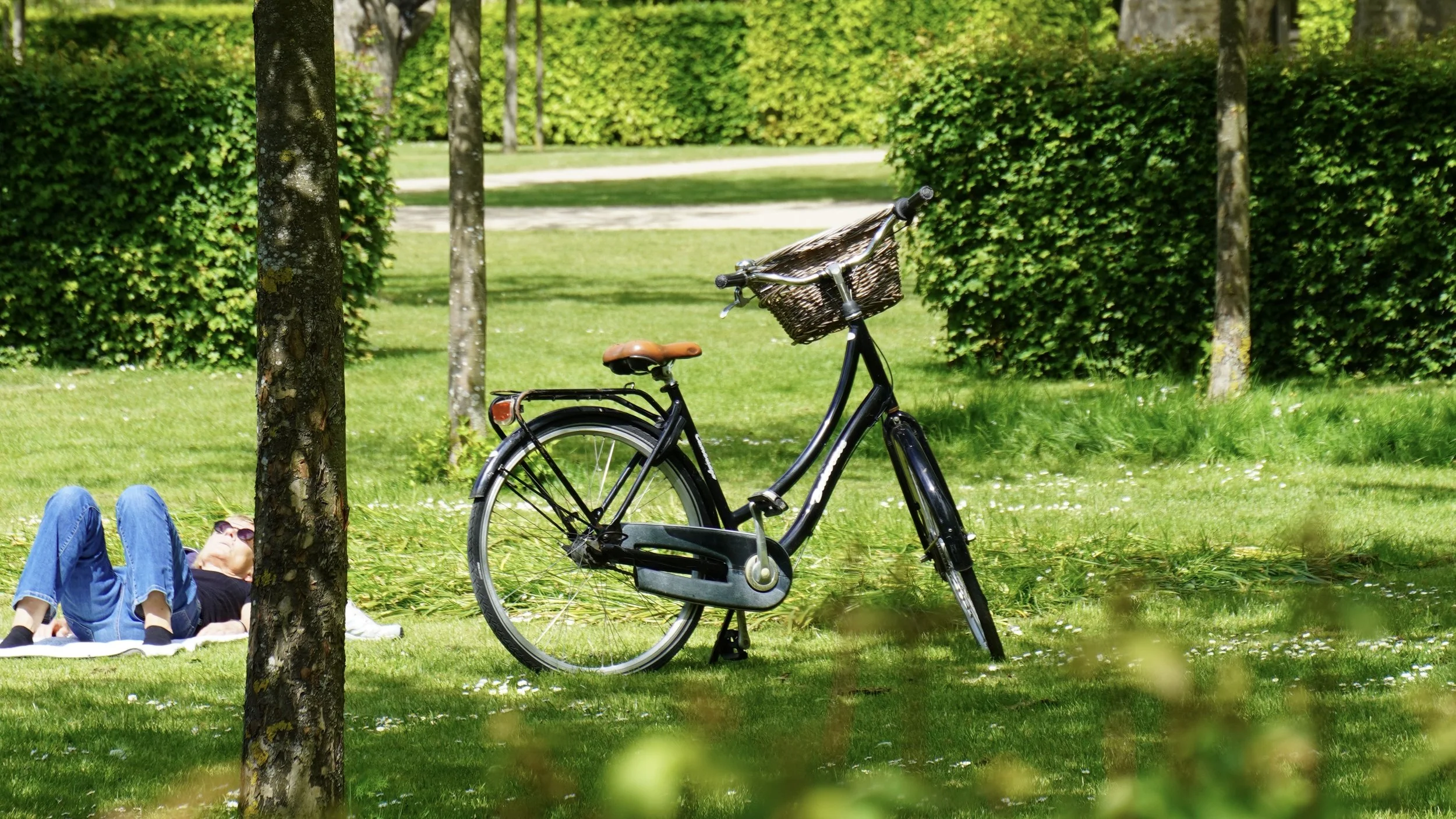
I loved the angle at which the bikes in the Rosenborg Castle gardens cast their shadows on the grass, the way boats drifted without aim down the canals—often in search of nothing more than a stray ocean breeze that had lost its way home. I longed to sit along Strøget, letting a flat white leave froth on my lip as I dusted cardamom bun crumbs off my lap, sending them tumbling onto the cobblestone. I would sip my coffee slowly, eyes shifting from red building to yellow, watching the afternoon order lunch across the street, adjust its sunglasses in a shop window, freewheeling its bike through the city until the evening walked it home.
In need of a new vantage point, I set out on a late afternoon cruise through the canals. Squeezed shoulder-to-shoulder with a group from Canada and another from Lithuania, I relaxed into the nippy Scandinavian air as we drifted across the glitzy sheet of turquoise.
A chorus of exclamation filled the boat as we passed the houses of Nyhavn, carved from some Hans Christian Andersen tale, and the Little Mermaid Statue, quite regal even in her oxidized bronze regalia. While charming, I didn’t want the city to pander to me as a tourist. I wished to see it, hear it, for what it believed.
Our guide Nina started peeling back the layers on Copenhagen as we slowed near the banks of Torpedohallen, old storage bunkers for the Danish Navy turned into swanky apartments. Across the canal, I could make out the faint electric guitar of a Beatles ballad, the Paper Island waterfront, she noted, a once-industrial area of the city. Rounding the corner from the old Navy barracks, we waved to a pair of boys counting down a cannonball into the water. From here, Nina pointed to CopenHill, her favorite building in the city, a waste-to-energy plant fitted with an artificial ski slope and exterior rock climbing facade. The city had such a way of coexisting with both its past and its environment.
Towards the end of the evening, Nina asked if we had heard of “hygge”. I shook my head, to which she gestured animatedly around us, a triumph in her stride as she moved to the front of the boat.
“Take nothing away from Copenhagen but this,” she proclaimed. “This is how the Danish live life.”
Her words weren’t so much a sermon as they were simply what Copenhagen, its people, lived for.
“Hygge means to enjoy the simple pleasures: eat in a cafe, bike by the water, spend time with family. Do as the Danish do,” she implored. “Live and let live.”
Disembarking onto the harbor, I felt her words pull at me, tugging on my shirt as if to say I had it all wrong. And so, struck by this sudden urge, I slipped my phone into my pocket and set off in the opposite direction, letting the amber lining the streets pick my next turn.
I walked as the sky bruised a lovely periwinkle, sun bleeding out beneath it. Eventually, darkness swallowed it all, leaving me alone on some unknown street in this unknown city, save for a few other meandering souls. I contemplated if they were searching for something or running away from it. Or, perhaps, that was the question they hoped to answer. In any case, I had seen more of Copenhagen by not seeing anything in particular at all. Passing conversations, small ceramic studios, the fur-lined scarf tossed around a shopkeeper’s shoulders. The night had lived in the details.
I wondered how it would feel to have this freedom, this sense of discovery, every day: to make choices, and to not make them. To search for some things, while others chase me back. To find life, just as it reveals itself to me.
And so, I suppose, there seldom are perfect places in this world, as stunning as Copenhagen is. But there are perfect moments. And if I could live one over again, it would be this one.
